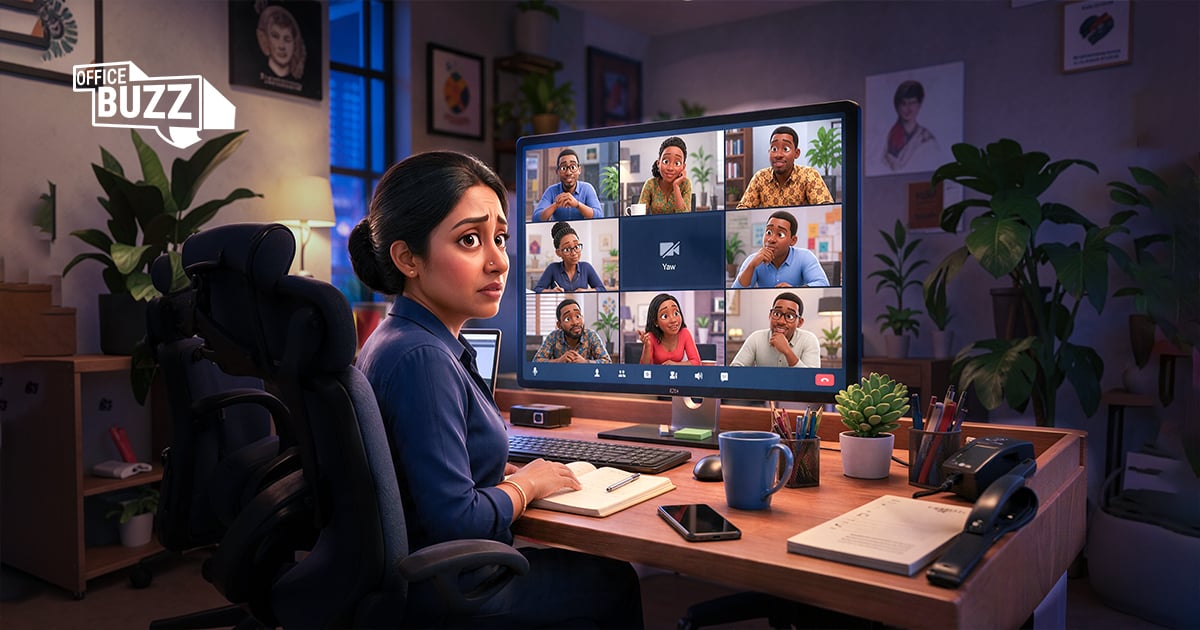
Monday morning meetings had one unofficial rule. Cameras on!
It wasn’t written in the employee handbook. No memo had gone around. HR had never sent a reminder. It had simply become part of the culture, one of those expectations everyone seemed to understand without anyone having to explain it.
At 9:00 a.m., twelve faces appeared on the screen.
Some looked polished and ready for the week. Others looked like they had just rolled out of bed. But Yaw didn’t fall into either category. His camera was always off, so nobody could tell.
At first, nobody cared. Yaw was good at his job. He answered questions precisely and had a habit of sending work in before anyone had to ask for it. When he spoke, people listened because he usually had something useful to say.
So nobody questioned the black square with his name on it. Until they did.
Yaw became quieter. He rarely volunteered comments during meetings. If someone asked for his input, there was sometimes a long pause before he answered.
People began filling in the gaps.
“He’s never really here,” someone said in a private chat.
“Maybe he’s doing something else during meetings.”
Another person wondered aloud whether Yaw had taken on freelance work.
Nobody asked him. There was no need, they seemed to think. The camera had already answered the question.
Then came the meeting with a key partner. When his manager asked him to share his screen, there was silence.
Five seconds. Thirty. One Minute. His screen finally appeared after five good minutes.
It was awkward waiting that long and by the time his screen came on, the damage had been done.
After the meeting, the comments started again.
“He wasn’t prepared.”
“Something is definitely going on.”
“He needs to be more present.”
The irony was that his work had been completely present.
His manager, Priya, eventually called him.
“Yaw, can I ask you something?”
“Sure.”
“I’ve noticed you’ve been quieter lately. And your camera is almost never on. Is everything okay?”
There was a pause.
Then Yaw laughed softly. “I was wondering when someone would finally ask.”
He explained. His internet connection at home was unreliable. He relied on mobile hotspots, and video consumed enough bandwidth to make the connection unstable. With his camera on, he could disappear from the meeting several times in an hour.
He hadn’t told anyone because he didn’t want the explanation to become the story.
He didn’t want people wondering whether he could afford better connectivity.
So he had chosen the one thing he thought would make the problem invisible. However, his choice had made him look disengaged instead.
Priya sat quietly. She thought about the private comments she had heard. The assumptions she had made. The way she had started interpreting his silence as disinterest.
The following Monday, Priya started the meeting differently.
“Before we begin,” she said, “just a quick one. Cameras are encouraged, but they’re not a measure of whether you’re engaged. If you need yours off, keep it off. We’ll focus on participation and the work.”
Nobody said anything.
Then Yaw unmuted.
“Thank you.”
Priya nodded.
The meeting continued. Some cameras stayed on. Some went off.
Nobody mentioned it. And for the first time in several weeks, Yaw didn’t come across as the unengaged employee.
The takeaway
Workplaces often create unofficial measures of professionalism because visible behaviour is easier to judge than actual contribution.
A person who speaks less may still be paying attention. Someone who keeps their camera off may still be fully engaged. Someone who leaves exactly at 5:00 p.m. may be just as committed as the person who stays until 7:00.
The problem isn’t having expectations. It’s mistaking visibility for performance.
Good managers don’t ignore changes in behaviour. They get curious about them before they turn them into conclusions.
Sometimes, the person who looks least present is simply the person working hardest to stay connected.