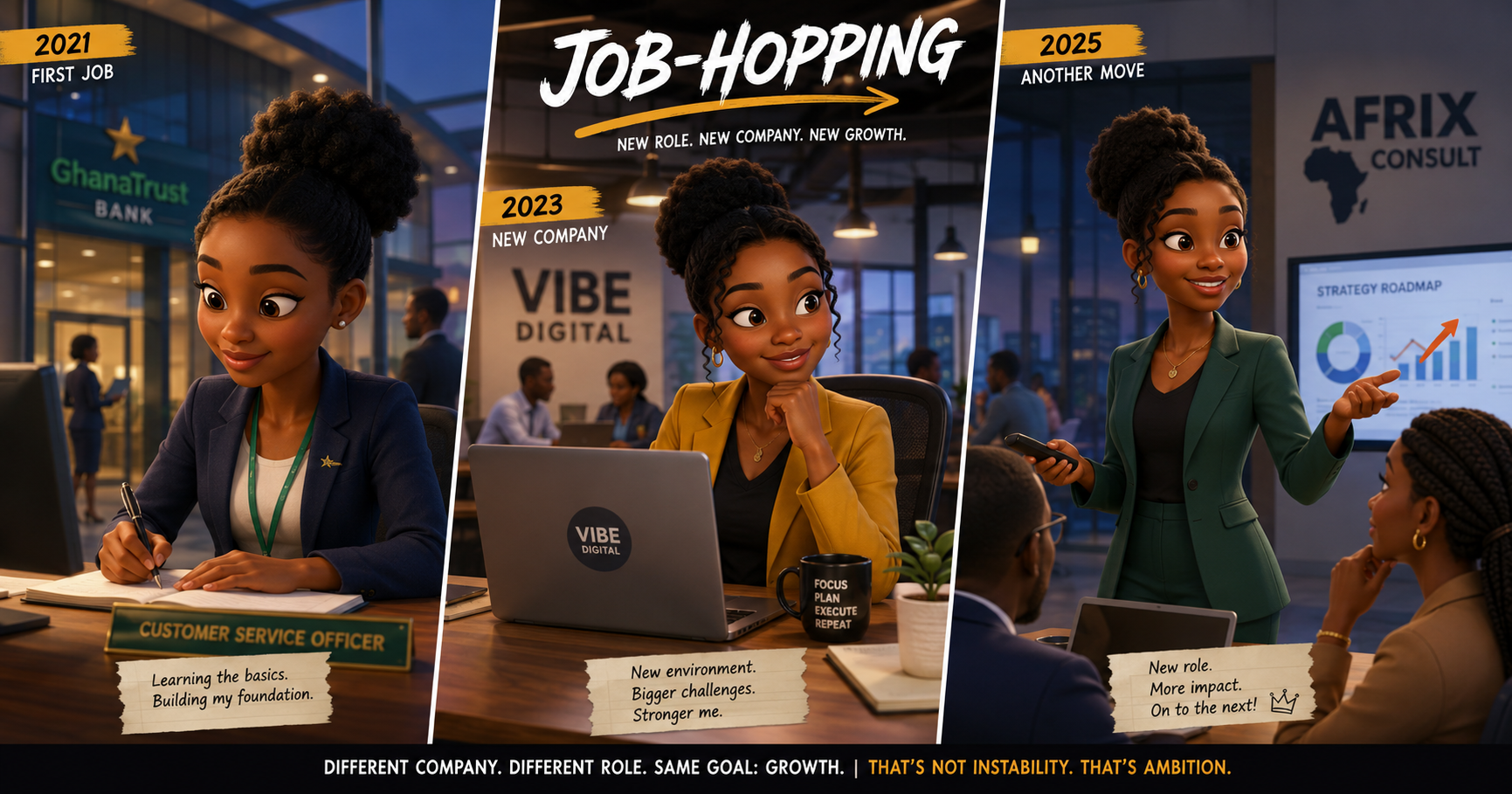
There was a time when staying at a company for less than three years was considered a career death sentence. It won you the dreaded label of a “job-hopper”, someone viewed as unreliable, disloyal, or difficult to manage.
But in today’s fluid job market, the stigma around job-hopping has drastically shifted. With remote work, economic shifts, and a cultural pivot toward prioritising mental health, moving between roles has become incredibly common.
Still, if your CV looks like a laundry list of short-term gigs, you might be wondering: Is job-hopping ruining my chances of getting hired? What do recruiters actually think when they see short job terms?
At Jobberman, we sit at the centre of interviews and here is the truth about how hiring managers view job-hopping today, and how to make your career moves work for you instead of against you.
Table of Contents
What Exactly Counts as Job-Hopping Today?
For recruiters, job-hopping is generally defined as a pattern of holding multiple consecutive jobs, each lasting 12 to 18 months. However, a single short stint does not make you a job-hopper. Recruiters look for a pattern of behaviour over a three- to five-year window.
The Job-Hopping Spectrum
The perception of your career mobility depends heavily on two factors:
- Your Industry: In fast-moving sectors like tech, marketing, and startups, changing jobs every 18 months is often viewed as standard behaviour. In more traditional fields, such as law, finance, or manufacturing, expectations for longevity remain much higher (typically 3+ years).
- Your Career Stage: If you are an entry-level professional or a recent graduate, frequent job changes are widely accepted as you navigate your career fit. If you are a mid-to-senior manager, frequent job changes raise red flags about your ability to execute long-term strategies.
The Pros and Cons of Job-Hopping
Hiring managers don’t just look at the dates on your CV; they look at the why behind your transitions. Job-hopping carries both hidden advantages and obvious risks.
The Benefits of Job-Hopping
Modern recruiters know that strategic job-hopping often produces highly valuable employees. Here are some of the benefits;
- Rapid Skill Acquisition: Diverse experience means you’ve been exposed to different software, work cultures, and workflows. You adapt quickly.
- High Drive and Ambition: Frequently moving up usually means you are proactive, results-oriented, and hungry for growth.
- Competitive Market Knowledge: You bring fresh perspective and insider knowledge from competitors directly into their organisation.
The Risks: What Makes Recruiters Hesitant
Despite a more relaxed view, job-hopping still triggers anxiety for HR departments for a few major reasons:
- The Cost of Turnover: Onboarding a new employee is expensive and time-consuming. If a recruiter thinks you will quit in 9 months, the return on investment just isn’t there.
- Fear of Low Resilience: A history of very short job stays can make a hiring manager wonder: Do they leave the second a project gets tough, or do they receive constructive feedback?
- Team Disruption: Teams thrive on stability. Constant departures can hurt department morale and stall long-term projects.
When Is Job-Hopping Justified?
You should never stay in a miserable situation just to protect your CV timeline. Recruiters overwhelmingly agree that leaving a job early is completely justified under the following circumstances:
- Layoffs or Restructuring: Involuntary job loss due to corporate budget cuts or downsizing is never counted against you.
- Toxic Work Environments: Severe burnout, poor management, or unethical practices are valid grounds for protecting your well-being.
- A Misrepresented Role: If the actual job duties look nothing like the job description you signed up for, it makes sense to exit.
- Unmatchable Career Growth: Being poached by a competitor for a massive promotion and a 20%+ salary increase is a logical career move.
How to Turn Job-Hopping into a Strengths
If your CV shows a few short stays, you don’t need to hide them. Instead, you need to control the narrative during your interviews. Here is how to reframe your history:
1. Highlight it as Career Growth
If you changed jobs frequently but each move came with a better title and more responsibility, point that out. Instead of saying, “I kept leaving because I wanted more money”, say, “My career transitions have been driven by a desire to challenge myself. Each move allowed me to take on larger projects and expand my skill set in ways my previous roles couldn’t accommodate.”
2. Emphasise Results Over Time
Prove that even though your time was short, your impact was significant. Quantify what you accomplished while you were there. Example: “While my time at X Company was brief due to a corporate reorganisation, I am proud that I successfully launched our new client portal, which reduced customer support tickets by 15% in just six months.”
3. Reassure Them
If a recruiter is worried you’ll jump ship, explicitly tell them that you are looking for stability. Example: “I’ve gained incredibly diverse experience over the last few years, but I am specifically looking for my next long-term career job where I can deeply invest in a team’s success over the next several years.”
Job-hopping is no longer an automatic disqualifier, but it does require an explanation. If your career moves showcase a clear trajectory of growth, adaptability, and high performance, modern recruiters will see you as a dynamic asset, not a flight risk.
Looking for your next career move? Visit www.jobberman.com.gh/jobs to apply for job vacancies.
It depends on the pattern. A single short-term stay at a company is rarely an issue. However, if your CV shows three or four consecutive jobs where you stayed for less than a year, recruiters will view it as a red flag, assuming you are either a flight risk or a difficult employee.
Always frame your exits positively and focus on career advancement.
Yes, if it prevents you from reaching senior leadership roles. Companies rarely hire external executives or directors who have a track record of leaving every 12 months.
You shouldn’t lie about your dates, but you can change how you present them. If you did freelance, consulting, or contract work, group those projects under a single heading, such as “Independent Consultant (2023–2025),“ rather than listing five separate 3-month stints.