Table of Contents
Key Takeaways
- To prevent burnout, HR should model healthy boundaries, promote digital detox, and prioritise mental health resources.
- Gen Z thrives in a tech-driven workplace, valuing immediate feedback and flexibility, unlike previous generations.
- HR support is crucial for guiding Gen Z in responsible AI use by providing clear policies and interactive learning experiences.
- Empowering Gen Z to leverage AI while maintaining accountability ensures that technology enhances creativity, not replaces it.
- Organisations like Jobberman Ghana implement hybrid work models and continuous AI training to meet Gen Z’s unique needs and expectations.
How can HR support Gen Zs in an always-tech environment? Gen Zees are the new face of the fast-paced workplace. From corporate to owned businesses to factory work, they are the new breed of young and energetic workers. Gen Zees born between 1997 and 2012 were born into an era when computers were taking flight; hence, they have gotten used to the way. These new breed of workers came into the workspace with their own ideologies, work norms and ethics, which older generations find it difficult to get accustomed to. For Gen Z, in a few seconds, what would have been a year-old speech to a boss could be said in a split second. These are the reasons why heads of HR departments, or what is now popularly referred to as people and culture, are seeking to understand how to collaborate with them regarding AI, tech and their work ethics.
Gen Z vs Previous Generations
Unlike Millennials and Gen X, Gen Z expects immediate feedback, seamless digital communication, and a sense of purpose in their work. While older generations transitioned into digital tools, Gen Z was raised on them, bringing both unprecedented adaptability and new vulnerabilities to digital fatigue. The desire for flexibility and rapid growth is stronger than ever, yet so is the risk of burnout and disengagement in a world where the workday never truly ends.
The Challenge of an Always-on Tech Environment and Opportunities
The proliferation of digital tools offers Gen Z flexibility, creative collaboration, and innovation at scale. However, the same environment can lead to constant notifications, pressure to always be available, and eroded boundaries between professional and personal life.
“For Gen Z, technology is not the problem! It’s the pace without pause. They embrace digital tools to innovate and collaborate at scale, but they are also intentional about defining where work ends and life begins. What some misinterpret as disengagement is often a healthy demand for boundaries, sustainability, and clarity in a world that never logs off.”
— Rita Kusi, CEO & Senior Consultant, KUSI Consulting
And the boundary is one issue Gen Zers want to define the lines by. Yes, tech works the magic for them, but they always seek to place a boundary where work ends. This sometimes leads older generations to misunderstand them as lazy or a hard nut to crack.
The Rise of AI in Gen Z’s Work Life
Gen Z is not just digitally native; they are also the first generation to adopt artificial intelligence (AI) naturally into their daily workflows. From AI-powered automation tools and chatbots to generative AI platforms, Gen Z is redefining productivity and creativity in the workplace. They leverage AI for research, communication, and self-development, making them faster and, at times, more efficient than previous generations. However, as AI becomes more embedded in their routines, new challenges arise. There is a fine line between leveraging AI for productivity and over-reliance on it that can compromise originality, critical thinking, or ethical boundaries. Issues like plagiarism, data privacy, and the temptation to bypass essential learning opportunities are very real.
In October 2025, Harvard Business Review conducted a survey on how Gen Z are using generative AI. The report said, “More Gen Z adults are using AI as a productivity tool than for social reasons. Two out of three (65%) respondents reported using an AI chatbot as a replacement for Google searches in the last month. Just over half (52%) used AI to “help [them] with [their] work.” And 46% used AI to “help [them] with writing” (which may overlap with work use).”
How HR Can Guide Responsible AI Use Amongst Gen Zs in the Workplace
HR plays a critical role in guiding Gen Z toward responsible AI use by meeting them where they are: digitally, culturally, and experientially. This means setting clear, transparent policies while speaking Gen Z’s love language through personalised, practical learning experiences that are interactive, relevant, and values‑driven. By combining customised AI literacy training with continuous engagement and real‑time feedback, HR can ensure technology enhances productivity without eroding trust, judgment, or work‑life boundaries, keeping innovation human-centred, ethical, and sustainable.

How HR Can Support Gen Z’s AI Growth
HRs can support Gen Z AI growth by focusing on empowering Gen Z to use AI as a tool for creativity and efficiency while maintaining accountability and nurturing core skills. By building digital literacy programs, setting up AI mentorship opportunities, and monitoring for signs of misuse, HR can ensure that AI is a force multiplier rather than a crutch.
HRs can also designate a specific type of AI tool they recognise as a company. This strategy has been used by Jobberman Ghana by recognising Gemini, Perplexity and Claude as its main generative AI tools. Its communications team, Ringier Media Communications, has laid out AI governance policies for the entire group, resulting in a homogeneous AI system across the group.
HR’s Evolving Role as a People and Culture Builder
To truly support Gen Z, HR must move beyond enforcing policies to actively architecting a culture of well-being. This means setting and modelling healthy digital boundaries, offering digital detox programs and mental health resources, and encouraging regular check-ins that prioritise psychological safety. For Gen Z, culture is not what is written; it is what is practised daily.
Guest Speaker Talking Points – Rita Kusi (Gen Z Well‑Being)
Model the behaviour you expect: Leaders must demonstrate healthy digital boundaries by logging off visibly, respecting time zones, and discouraging “always‑on” culture.
Redefine productivity: Shift from hours worked to outcomes delivered, giving Gen Z autonomy while maintaining accountability.
Build psychological safety: Use regular check‑ins that prioritise how people are doing, not just what they are doing.
Normalise digital rest: Encourage digital detox moments, meeting‑free days, and protected focus time to prevent cognitive overload.
Customise work practices: Recognise that Gen Z thrives with flexibility, allowing them to design work rhythms that support both performance and health.
Listen and adapt continuously: Use pulse surveys and feedback loops to co‑create policies that evolve with employee needs.
When HR leads with empathy, intention, and flexibility, remote work becomes not just efficient but sustainable, human, and future‑ready.
How to Strategically Support Gen Zs at Work
To strategically support Gen Zs at work, you must recognise Gen Z’s preference for autonomy by enabling hybrid work, flexible hours, and results-driven performance metrics. This fosters trust and reduces digital fatigue. Not only that, it is important to integrate digital wellness initiatives such as screen-free meeting days and access to counselling into your benefits package.
Also, utilise digital platforms such as Leapsome to gather real-time feedback and recognise peers. For communication, you can use Slack. Remember, Gen Z values transparency and rapid communication, both of which boost engagement and retention. Finally, employers should invest in HR training to stay current with Gen Z’s platforms and communication styles. Understanding their world is key to effective support.
How Jobberman Supports Gen Zs
At Jobberman Ghana, we have a mix of Gen Z, millennials, and Gen X. As HR leaders, we have implemented a hybrid work approach tailored for all generations. We also have trained staff in AI prompting and hallucinations, and we offer continual training on AI use and governance. We also train staff on key technology tips, including cybersecurity and remote-work guidelines.
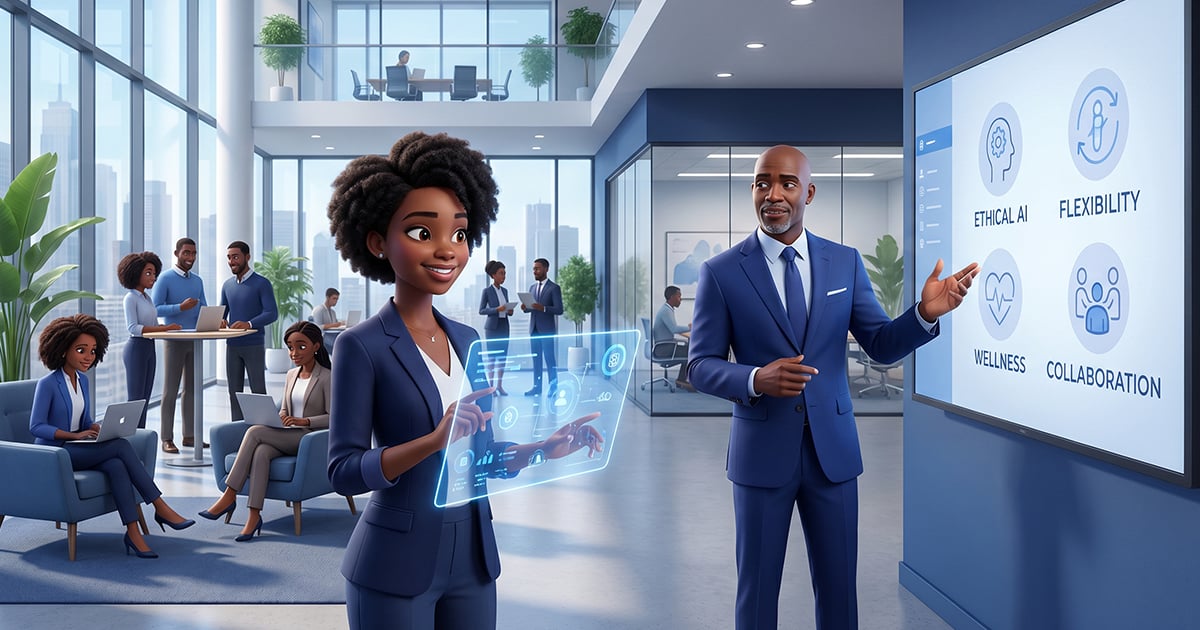
Gen Z’s digital-first approach is reshaping the future of work. To attract and retain top Gen Z talent, HR leaders must champion flexibility, wellness, and purpose. Let’s collaborate to create workplaces where technology empowers the next generation of workers rather than overwhelms them.
You are invited to join the HR & CEO Wave Summit 2026, where HR leaders and CEOs will provide in-depth insight into building a resilient, future-ready organisation by mastering AI adoption and Gen Z’s expectations. This conversation continues at the event, converging diverse voices for maximum impact. Visit www.jobberman.com.gh/events to save your seat now.
Gen Z leverages AI-powered tools for research, communication, automation, and creative tasks. They use generative AI for writing, idea generation, and problem-solving, making their workflows more efficient and dynamic.
Companies like Jobberman offers a comprehensive HR outsourcing package that includes tailored solutions for talent acquisition and workforce management. This will enable them to integrate systems, such as AI adoption, to improve your workforce management.