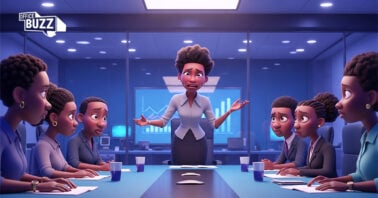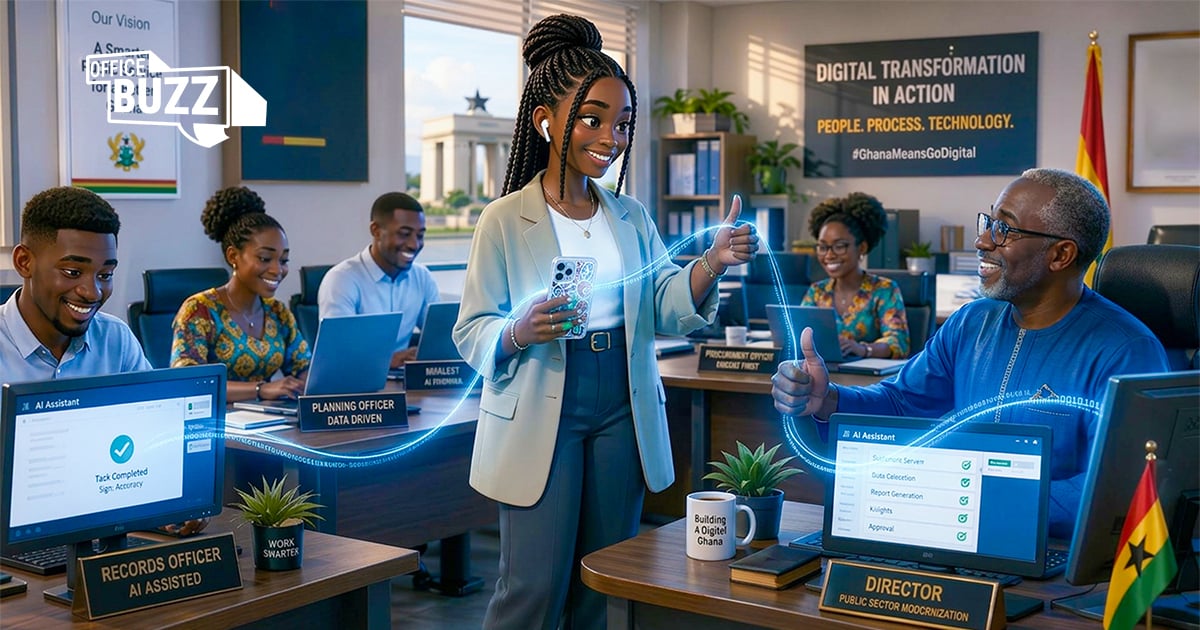
When Adel received her posting letter for national service, she was assigned to a government agency in Accra as an admin assistant. Like many fresh graduates, she was both excited and nervous. She had grown up in a digital world, with WhatsApp groups for class projects, Google Docs for assignments, and AI tools for quick research. But stepping into the office, she quickly realised the environment was very different from the fast‑paced, tech‑savvy campus life she had just left behind.
In her first week, Adel noticed that many of her superiors, respected officers with years of experience, were still relying on manual processes. Payroll was reconciled with calculators, leave requests were filed in thick paper folders, and meeting minutes were typed out slowly on outdated computers. She couldn’t help but wonder: “Why are we spending hours on tasks that could be done in minutes with digital tools?”
At first, she kept quiet. After all, she was just a national service person. But as she watched stacks of files grow taller and colleagues complain about workload, she realised this wasn’t just inefficiency, it was an opportunity for her.
Adel began small. She introduced her supervisor to some effective digital tools. She set up shared folders so teams didn’t have to pass flash drives back and forth. She even demonstrated how AI assistants could draft routine letters, saving hours of typing. Her colleagues were skeptical. Some laughed it off as “Gen Z tricks.” Others worried about security. But Adel persisted, patiently explaining and demonstrating so that her colleagues would adopt. Slowly, the office began to change. Reports were generated faster, communication became smoother, and the piles of paper started to shrink.
Reverse Mentorship in Action
What Adel was doing was more than helping; it was reverse mentorship. Traditionally, older staff mentor younger ones, passing down wisdom and discipline. But here was a Gen Z intern mentoring her seniors in digital fluency. And it worked. Her colleagues began to appreciate her insights, while she, in turn, learnt from them about patience, protocol, and navigating bureaucracy. It was a two‑way exchange: they gave her institutional knowledge, and she gave them digital confidence.
Preparing for the Future of Work
Adel’s case is a mirror of Ghana’s workplaces today. Our offices are filled with experienced professionals who know the system, but many lack digital skills. Meanwhile, Gen Z brings fresh energy and fluency in technology. If we embrace reverse mentorship, learning from Gen Z while preparing them for leadership, we create workplaces that are both efficient and future‑ready.
This is an indicator that the future of work in Ghana is not about age, but adaptability. Digital tools and AI are not “for the young”; they are for everyone who wants to stay relevant.
Gene’s office survival tip: If we don’t accept the need to be AI‑adoptive and digitally fluent, we will be left behind in the world of work, no matter our role or generation.
Join us at the HR & CEO Wave Summit on 14th May at the Movempick Ambassador Hotel, on the theme: “Navigating AI Adoption and Gen Z Expectations for a Future-Ready Workplace”. Save your seat here.