A relatable workplace culture story about how harmless weekend text messages accidentally created a toxic, always-on environment, and the simple rule that fixed it.
At Horizon Media, nobody expected replies after working hours. At least, that was the official policy.
The Managing Director had said it during orientation. “Once you leave the office, your time is your own. Unless there’s an emergency, work can wait until tomorrow.” Everyone nodded and agreed, yet somehow, every evening, the office WhatsApp group came alive.
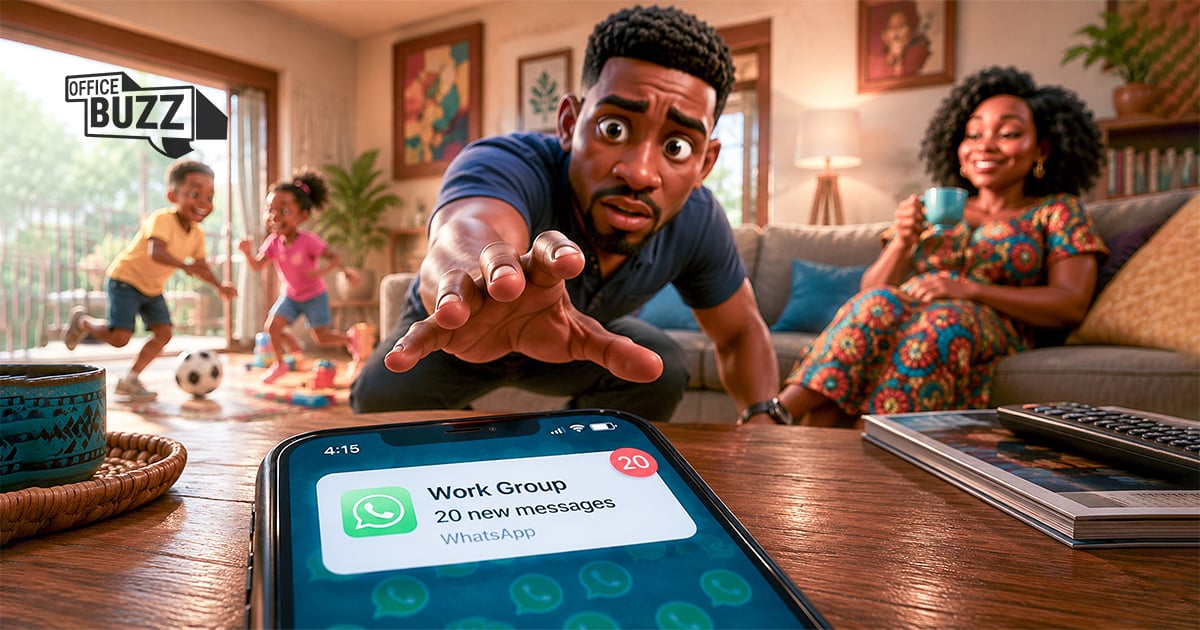
It usually started with Opoku. At 8:43 p.m., his message would pop up. “Just finished updating the proposal. Please have a look when you can.” Five minutes later, Dufie replied. “Looks good. I’ve added a few comments.” Then Mensah. “I’ve corrected the budget figures.” Soon enough, half the team was discussing work while the rest silently watched the conversation unfold.
No one wanted to be the only person who hadn’t responded. By Saturday morning, the notifications returned. Someone shared a revised presentation. Someone else suggested changes to next week’s strategy. Another employee uploaded a new spreadsheet “just in case.”
Nobody had been asked to work, nobody had been instructed to reply, yet everyone did. Ama noticed something strange. Whenever she ignored the messages until Monday, she felt guilty. What if everyone thought she wasn’t committed? What if earning a promotion came down to who appeared most dedicated? So she started replying too. Sometimes from weddings, from family dinners, she told herself it only took a minute, but the minutes kept finding her. One became five, five became thirty. Soon, weekends no longer felt like weekends.
One Monday morning, the HR department announced the results of the annual employee engagement survey. One statistic caught everyone’s attention. “Eighty-two percent of employees feel pressured to remain available outside working hours.” The Managing Director looked genuinely surprised. “I don’t understand,” he said during the staff meeting. “Who has been asking people to work on weekends?”
The room fell silent. People glanced at one another. Finally, Opoku raised his hand. “No one.” Another employee nodded. “We’ve been doing it to ourselves.” The room became quieter than anyone expected. The Managing Director frowned. “What do you mean?”
Dufie spoke next. “When one person sends work messages, the rest of us feel we have to respond. Not because we’re told to, but because we don’t want to look less committed.” For the first time, everyone saw the pattern.
There had never been a demanding manager. There had never been an official expectation. There had only been dozens of employees quietly competing to appear the most dedicated. Each message encouraged another. Each late-night reply raised an invisible standard. Without realising it, they had created a workplace where everyone was always online.
The following week, the company introduced a simple rule. If an idea wasn’t urgent, write it down. If an email could wait, schedule it for the next working day. If a message was sent after hours, everyone understood there was no expectation of an immediate reply.
Something remarkable happened. The WhatsApp group became quiet on weekends. Not because people stopped caring but because they finally believed that resting wasn’t a sign of laziness. It was part of doing good work.
Months later, productivity didn’t fall. If anything, it improved. Fresh minds solved problems faster than exhausted ones ever could. Sometimes the biggest source of workplace pressure isn’t company policy; it’s the culture employees unknowingly create together.
Key Lessons from This Workplace Culture Story
- Healthy workplace culture isn’t shaped only by leaders: Employees influence it every day through the habits they normalise. Sending work messages after hours, even with the best intentions, can create unspoken pressure for others to stay connected. Before pressing “Send,” ask yourself: Does this really need attention now, or can it wait until tomorrow? Respecting boundaries is a responsibility shared by everyone.
- Schedule urgent messages: If inspiration strikes you on the weekend, use the “Schedule Send” feature in Slack, Teams, or email. Let it land in your coworker’s inbox during working hours the next business day.