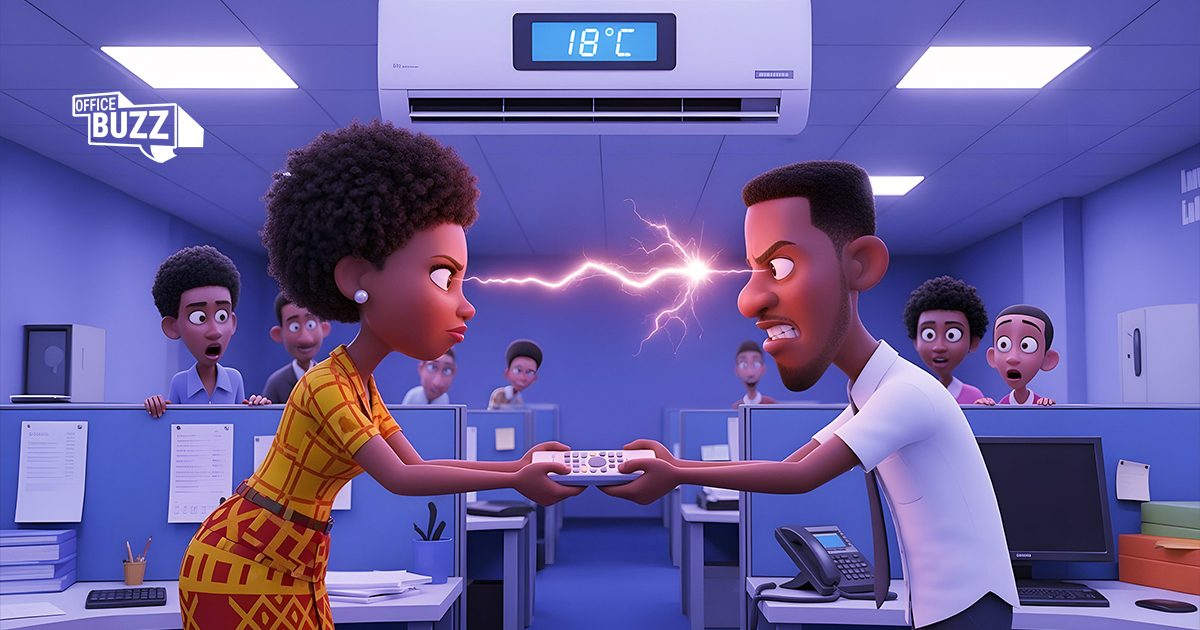
Every office has its unspoken battles. Who left dirty dishes in the sink, whose ringtone keeps going off in meetings, or who “borrowed” the stapler without returning it? But none of these compares to the fiercest and longest-running war of them all: the Air Conditioner War.
In the BOLD Vision office, Robert is the undisputed Minister of Cold. He swears that his best ideas only come when the room feels like a freezer. He’ll tell anyone who listens, “The brain functions better at 18 degrees.” Dressed in short sleeves and with a smug grin, Robert sits comfortably in the icy blast, completely unfazed, while others are visibly shivering.
Then there’s Akusika, founder, president, and life member of the Anti-Freeze Association. She comes to work every morning with layers: a cardigan, a shawl, and sometimes even socks, shaking her head like she’s reporting for duty in Siberia instead of Accra. By 9:00 a.m., she’s already whispering, “Who touched the AC? My fingers can’t type!”
The real drama begins with the remote control. Robert gets in early, casually setting it to 18°C, humming to himself like a man who’s won, but the victory never lasts. By mid-morning, Akusika sneaks in like a secret agent, cranks up the temperature to 25°C, and sighs in relief as her hands thaw. Within an hour, Robert is back, dramatically fanning himself with a notepad as though he’s about to faint in the Sahara.
The cycle continues all day: 18, 25, 20, back to 18. The poor AC remote is passed around more than the office stapler, sparking mini “climate change” debates at every turn. Colleagues caught in the middle have developed their own survival tactics; some stash sweaters in their drawers, others carry hand fans, while a few simply sit quietly, hoping for a natural disaster that will render the AC obsolete once and for all.
So, who should win this never-ending battle? Robert and his quest for the Ice Age, or Akusika and her fight for tropical comfort? Or maybe just maybe the solution is a peace treaty at 23°C.
What do you think—Team Robert (Ice Block) or Team Akusika (Human Heater)?
At first, it seemed like a silly squabble over degrees, but soon everyone realized it wasn’t just about cold or heat. It was about preferences, respect, and learning to coexist. In a workplace, you’ll never find everyone wanting the same thing. Some individuals thrive in silence, while others require background chatter. Some people love teamwork, while others prefer independence. And yes, some people like it cold, while others like it warm.
5 Lessons from the AC War
The AC war taught a simple but powerful truth. No matter how small the issue, our ability to accommodate and tolerate others makes all the difference.
- Everyone has different preferences, and that’s okay.
Just like Robert preferred the cold and Akusika preferred warmth, your colleagues will always bring different tastes, habits, and comfort zones into the office. Diversity of preferences isn’t a problem; it’s part of what makes a team dynamic. - Minor conflicts can become big distractions if not managed with care.
What began as a simple temperature adjustment soon became an office-wide “war.” Similarly, leaving minor issues unchecked, from seating arrangements to emails, can escalate into larger tensions that undermine productivity. - Respect is the foundation of any healthy workplace.
Respecting that someone else feels cold when you’re comfortable shows emotional intelligence. When colleagues feel seen and valued, even in the most minor matters, it strengthens trust and teamwork. - Flexibility creates harmony
Sometimes you adjust for others, sometimes they adjust for you. No one can always have their way. Workspaces thrive when people learn to compromise: one day you lower the AC, another day you let it be warmer. That give-and-take keeps the peace and ensures everyone can focus on the bigger goals.
- Tolerance isn’t weakness.
Tolerance is a strength that enables teams to move forward together. Tolerating different personalities, habits, or quirks doesn’t make you less assertive; it makes you wise. It shows maturity to rise above the little battles and keep your eyes on what truly matters: progress and collaboration.
The office can only thrive when we stop fighting for “my way” and start asking, “How can we all be comfortable enough to do our best work?” So, the next time you pick up the AC remote or face any “small war” at work, remember: It’s not about winning. It’s about working together.
This is the office, Buzz! Work, Culture and everything in between.
Remember to share this with that colleague in the office who needs to read this.