Beyond the Factory Floor: Why Modern Manufacturing Needs More Than Manual Labour
Ghana’s manufacturing ambitions will require more than investment in factories. They require people who can operate, improve, and lead these businesses.
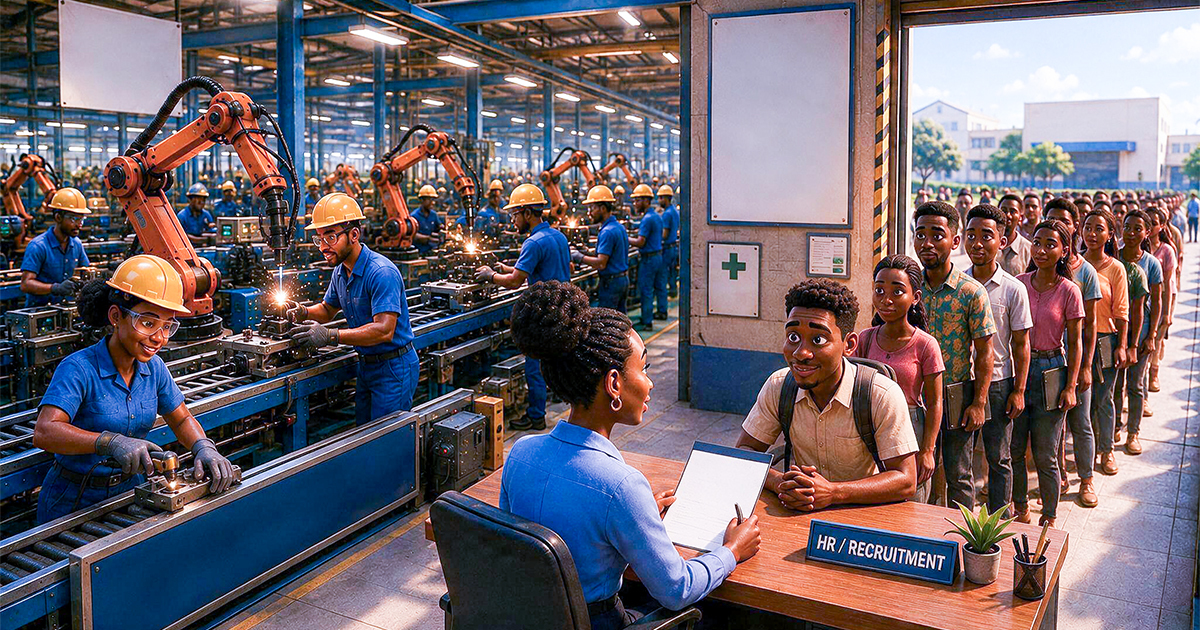
When people hear about manufacturing, they often picture routine labour. However, the rise of modern manufacturing careers in Ghana is redefining the industrial workforce. Modern manufacturing careers in Ghana require far more than production-line workers. Businesses need engineers, quality professionals, supply chain specialists, finance teams, and sales talent to keep operations running and support growth. As manufacturing becomes more technology-driven, the skills required are becoming more specialized.
The problem is that how we talk about manufacturing has not kept pace with how the industry itself is changing. And in Ghana, the stakes of that gap are rising. Manufacturing sits at the center of the country’s industrialization ambitions, from the One District One Factory initiative to the opportunities opened by the African Continental Free Trade Area.
Machines alone will not meet those ambitions.
For employers, this perception has practical consequences. If manufacturing is seen as a temporary job rather than a career, people seeking a long-term career may not consider the sector at all. Those who do apply may be looking for a short-term opportunity rather than a place to grow. That makes it harder for employers to attract candidates who intend to stay and contributes to the high turnover many manufacturers face.
Table of Contents
The Data-Backed Case: Capital Inflow, Productivity, and Quality Jobs
Key insights from the JET Programme report highlight the scale of this sectoral transformation:
Technical & Knowledge Transfer: Sectoral policies, such as the Ghana Automotive Development Policy, are driving the adoption of high technology, the transfer of technical skills, and the integration of localized supply chains.
Massive Investment & Job Expansion: Over £120.5 million in private investment has been realized, primarily in automotive assembly, pharmaceuticals, and garments, with another £628 million in industrial deals in the pipeline projected to create 22,000 additional jobs.
Leading Sectoral Productivity Growth: Between 2013 and 2022, manufacturing led all Ghanaian sectors in productivity growth, at 14%, outperforming traditional pillars such as agriculture and services.
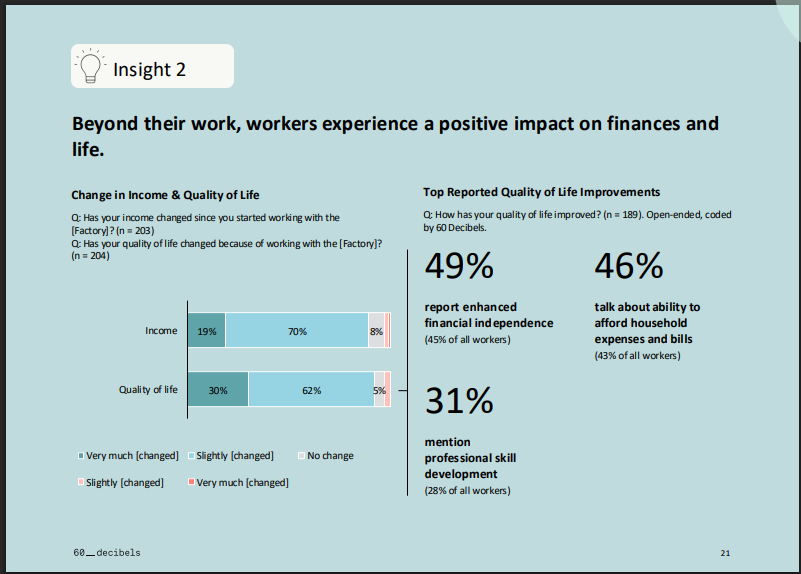
Higher Pay & Financial Health: The programme’s primary survey data reveals that 49% of workers across JET-supported manufacturing firms report improved earnings, while 46% report a better overall financial situation. Furthermore, 31% say their income allowed them to pay for previously unaffordable home or life expenses.
Long-Term Career Viability & Skill Development: Long-term tenure in modern manufacturing directly drives career progression. Among workers with over a year of tenure:
78% report acquiring relevant and transferable professional skills.
85% state that their daily work feels meaningful.
61% see themselves building a career at their facility for more than 5 years.
The AfCFTA Advantage for Manufacturing Careers
The African Continental Free Trade Area (AfCFTA) serves as a central gateway to a single continental market that connects 1.3 billion people and a combined GDP of $3.4 trillion. By eliminating trade barriers and lowering tariffs across the continent, AfCFTA is breaking free career potential within Ghana’s local manufacturing:
Projections show intra-African trade could increase by 52%, “resulting in an increase of African manufacturing exports.” This requires companies to recruit specialized Supply Chain Managers, Cross-Border Trade Compliance Officers, and Logistics Experts to navigate regional trade channels.
As African-made products move duty-free, Ghanaian manufacturers must meet international quality and safety benchmarks. This creates the demand for Quality Assurance Specialists, Industrial Automation Engineer, and Product Development Leads.
The Careers Young People Don’t Always See
A career in manufacturing does not always require a degree in manufacturing. A Mechanical Engineering graduate can work in production, plant maintenance, or operations. An Electrical or Electronic Engineering graduate can work with industrial systems and automation. A Chemistry graduate can move into quality assurance, laboratory operations, or product development.
The opportunities extend well beyond technical roles. Supply Chain and Procurement professionals are needed to manage sourcing and inventory. Finance professionals support cost management and investment decisions. Sales and marketing teams help take manufactured products to market.
Manufacturing is therefore not a single career path. It is an industry that brings together different areas of expertise. Yet young professionals cannot consider career paths they do not know exist.
Employers have a role in changing that. Job descriptions, graduate programmes, internships and career events can help prospective employees understand what the industry actually offers. When companies show how an entry-level role can develop into a more specialised position, they give people a reason to consider manufacturing for the long term.
The Employer’s Side of the Problem
Changing perceptions is only one part of the challenge. Manufacturers also need to examine the kinds of jobs they are creating and what happens after someone is hired.
There is understandable pressure to control operating costs, particularly in a sector where margins can be tight. Labour is one of the costs businesses have to manage. But continually hiring at the lowest possible cost can create a workforce that is difficult to retain. Manufacturing depends on accumulated experience: familiarity with production processes, equipment, quality requirements, and the daily problems of operations takes years to build, and it walks out the door with every experienced employee who leaves. As we have argued in this series before, people rarely leave where they are growing; in manufacturing, each departure also carries away knowledge the business paid for on the job.
The better question is not simply, “How cheaply can we fill this position?” It is, “What kind of workforce does this business need, and what will make good people stay?”
Building the Workforce the Business Will Need
Manufacturing is changing, and so are the capabilities required to run it.
As technology becomes more embedded in production, employers will need people who can work with new systems and adapt as those systems change. As businesses expand, they will need supervisors and managers who can lead people rather than simply oversee tasks.
This makes workforce planning increasingly important. Manufacturers need to think about the skills they will require before those skills become urgent vacancies. They also need to decide which capabilities can be developed internally and where external recruitment will be necessary.
That distinction matters. Hiring solves an immediate vacancy. Workforce planning looks at what the business will need next and how it intends to build that capability.
For employers, this can mean starting with the roles that are hardest to replace and identifying the career paths that could produce those capabilities over time.
HR Does Not Stop When Someone Is Hired
The workforce challenge continues after recruitment.
As headcount grows, so does the administrative work that comes with employing people. Contracts need to be managed. Payroll has to be processed accurately. Employee records need to be maintained, and statutory obligations met.
Payroll is one example. It requires reliable processes and careful administration, but a growing manufacturer does not necessarily need to build a large payroll operation internally.
Outsourcing payroll can give businesses access to specialist support while allowing internal HR teams to focus more of their time on workforce planning, employee development, and the needs of the business.
For companies entering Ghana or expanding their workforce, an Employer of Record arrangement can provide another option. It allows a company to employ people locally while an external provider manages key employment administration.
The point is not that manufacturers should outsource HR. It is that businesses should be deliberate about where internal capability creates the most value and where specialist support can help them operate more efficiently
Manufacturing Needs a Better Career Story
Ghana’s manufacturing ambitions will require more than investment in factories and equipment. They will require people who can operate those businesses, improve them, and eventually lead them.
That starts with changing how manufacturing is presented to potential employees. Young people need to see that the sector offers professional careers across engineering, operations, supply chain, technology, finance, HR, and commercial functions. Employers need to reinforce that message by creating jobs with clear opportunities to develop.
But changing the story is not enough. The experience has to match it.
If a manufacturer tells graduates that a career is waiting for them but offers no clear path beyond their first role, the perception will not change. If an employer invests in recruitment but not in retention, the same vacancies will keep recurring.
For growing businesses, building the workforce also requires the HR capacity to support it. That could mean strengthening the internal HR team, bringing in specialist recruitment support for high-volume hiring, or outsourcing specific HR functions where it makes sense for the business.
Manufacturing is more than factory work. It is an industry where people can build expertise, take on greater responsibility, and develop long-term careers.