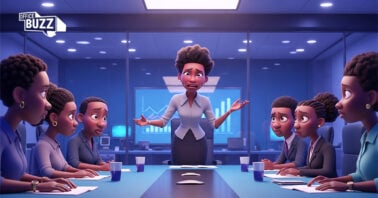
Nana Ama, a young graduate from one of Ghana’s tertiary institutions, did not come into the office to prove a point. She just wanted to do her job well. Fresh out of university, she was posted to a financial institution for her National Service. Like many young professionals stepping into corporate Ghana for the first time, she arrived with a mix of excitement, curiosity, and quiet determination.
She listened carefully in meetings. She took notes. She asked questions sometimes softly, sometimes after the meeting. And when given tasks, she delivered. Not perfectly. But thoughtfully. In her own way, she was contributing.
Table of Contents
The Other Side of the Table
Then there was Theresah. Experienced. Efficient. Respected. A millennial who had spent years navigating the same system, Nana Ama was just beginning to understand. She had seen different kinds of young people come through the office. Some eager. Some distracted. Some, in her words, “not serious enough.” So over time, she had formed a view. A quiet but firm one.
“These Gen Zs… they don’t like stress.” She didn’t say it loudly. But she said it often enough. In conversations. In passing comments. In the way she reacted to small things. And without realising it, that narrative began to shape how she saw Nana Ama.
When Perception Becomes Reality
One afternoon, Nana Ama submitted a piece of work she had spent hours on. Theresah reviewed it. “It’s okay,” she said. “But next time, be faster. You people like to take your time too much.” Nana Ama nodded. She didn’t explain that she had taken extra time to double-check her numbers. She didn’t mention that she had stayed back the previous day to finish it. She just said, “Noted.” And went back to her desk.
The Quiet Weight of Being Misunderstood
There’s something heavy about being judged before being understood. Nana Ama felt it in small ways: When her suggestions were brushed off too quickly, when her effort was seen as hesitation, when her silence was interpreted as a lack of confidence. So she adjusted. She spoke less. Asked fewer questions. Focused only on what was assigned. From the outside, she looked like she was settling in, but something important was being lost.
The Story We Don’t Question
The truth is, many workplaces are not struggling with Gen Z. They are struggling with the stories they have accepted about Gen Z. Stories shaped by social media narratives, isolated experiences, and assumptions repeated often enough to feel like facts: “they are entitled, they don’t like pressure, they lack commitment, but what happens when those stories become the lens through which every young professional is seen? Even before they’ve had the chance to show who they are?
What Theresah didn’t see
Theresah saw a Gen Z. What she didn’t fully see was that a young woman is trying to learn quickly. Someone who cared enough to do things right. Someone navigating a new environment while trying to find her voice. Not perfect. But present. Not entitled. Just evolving.
The Missed Opportunity
Here’s what often goes unnoticed: when older generations hold tightly to fixed narratives, they don’t just limit Gen Z. They limit what the team could become. Because somewhere between experience and fresh perspective lies innovation. Between structure and curiosity lies growth.
But only if both sides are willing to meet halfway.
Imagine what teams could achieve if experience and fresh perspective worked together, not against each other. Because the future of work in Ghana will not be built by one generation. It will be built through collaboration.
Not through assumptions. Not through recycled social media narratives. But through understanding, openness, and a shared commitment to doing great work. And maybe, just maybe, the real shift begins when we stop saying: “These Gen Zs…” …and start asking, “Who is this person in front of me, and what can we build together?
Be Part of the Conversation
If this story feels familiar, then it’s time we move beyond assumptions and start having real conversations about managing and collaborating with Gen Z in our workplaces.
Join us at the HR & CEO Wave Summit 2026 for a powerful panel discussion on “Managing Gen Z: Mindset, Expectations & Growth.”
This session will unpack:
- How to bridge generational gaps in the workplace
- How to move beyond stereotypes and unlock Gen Z potential
- How leaders can build stronger, more collaborative teams
Because the future of work is not about choosing one generation over another, it’s about learning how to work better together.