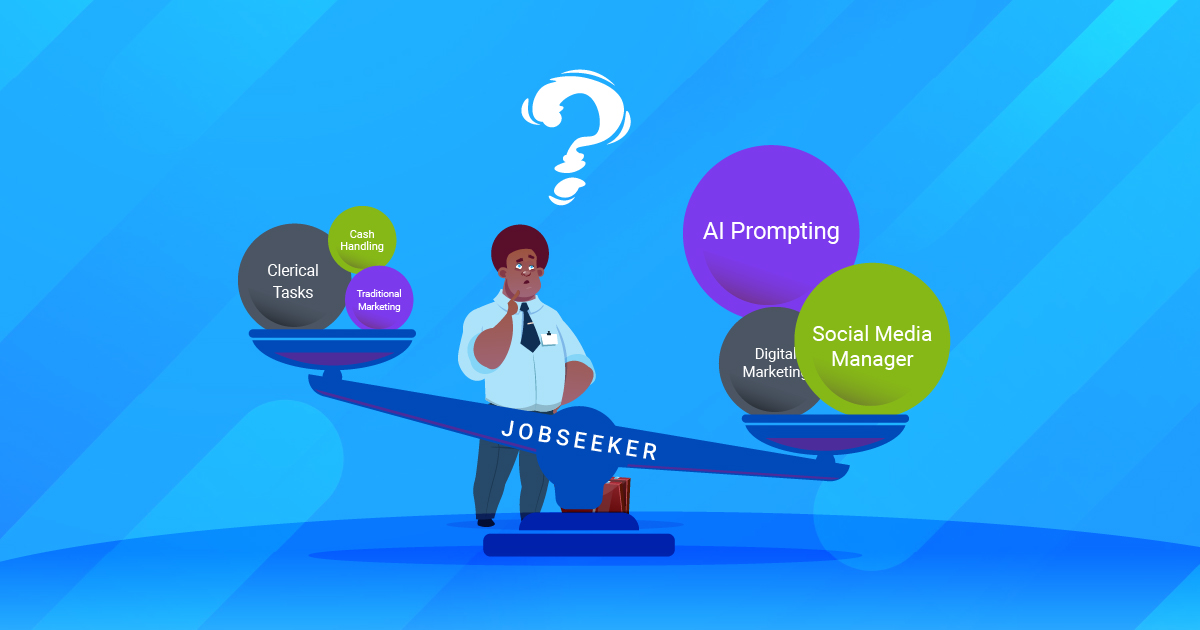
Understanding in-demand skills in 2025 is essential as we approach a rapidly evolving market with tremendous technological advances and shifting economic activities and industries. Who thought that Google, a tech giant, would be challenged by a generative AI search engine and social media serving as search engines competing with Google? These are the tip of the iceberg regarding the rapidly changing job market and technological advancements.
With these skyrocketing changes and advances, job seekers are self-tasked with staying abreast of the in-demand skills that would make them good fits. Not only does the change put pressure on job seekers, but it also puts pressure on professionals. Thus, understanding what in-demand skill is key to a job role and industry potentially would make you a good fit. As 2025 comes to a close, these top skills are inevitable and are a must-learn if you haven’t in the first half.
Here are five in-demand skills to master in the last half of 2025
Table of Contents
1. Data Literacy

In a data-driven world, decisions are no longer made on gut feelings. Every employee, from marketing to human resources, needs a foundational understanding of data. This means being able to interpret charts and graphs, understand key metrics, and use insights to inform your daily work.
Data literacy allows you to provide evidence for your ideas, justify your strategies, and measure the real impact of your contributions. Take a free online course on data fundamentals or ask your manager for access to company dashboards and learn to interpret the numbers behind your projects.
2. AI and Machine Learning

Artificial intelligence and machine learning have shaped the future of work with the use of generative AI. In light of that, companies seek professionals who can design and deploy AI models. AI engineers with machine learning languages create algorithms that power chatbots, recommendation systems and automation systems. This demands skills in Deep Learning – a branch of machine learning that “teaches computers to process data in a way inspired by the human brain. Deep learning models can recognise complex pictures, text, sounds, and other data patterns to produce accurate insights and predictions.” (Amazon Web Services, 2024)
The rise of generative AI and automation is reshaping every industry. Instead of seeing these technologies as a threat, learn to leverage them as powerful tools. Understanding how to use AI for tasks like data analysis, content generation, and workflow automation can make you significantly more efficient and indispensable.
As routine tasks become automated, your ability to work alongside and with intelligent systems will define your value. Start by experimenting with readily available AI tools like chatbots or design assistants. Look for online courses that teach AI fundamentals and prompt engineering.
3. Cyber Security Awareness

According to darkreading.com, Africa experienced the “highest cyber security attacks, with 2,960 weekly attacks per organisation.” Due to this increase in cyber attacks, organisations in Ghana and worldwide have taken stringent measures to conceal loopholes by requiring experts to develop systems that safeguard sensitive information. With cyberattacks on the rise, cybersecurity is not just a job for IT specialists, it’s a responsibility for every employee. Understanding basic security protocols, recognizing phishing scams, and protecting sensitive information is critical for safeguarding both your career and your company.
You are at a potential entry point for a cyberattack. Your vigilance can prevent costly breaches and maintain your company’s integrity and trust. Familiarize yourself with your company’s security policies. Take a free online course on basic cybersecurity practices and stay updated on common scams.
4.Digital Communication and Collaboration
With teams becoming more decentralized and global, your ability to communicate effectively in a digital space is a core competency. This goes beyond sending emails and includes mastering collaboration platforms, participating in virtual meetings, and knowing how to build relationships remotely.
Strong digital communication prevents miscommunication, boosts team productivity, and ensures you remain a valuable and connected part of your team, no matter your location. Get proficient with your company’s collaboration tools. Practice concise and clear written communication, and actively participate in virtual meetings with purpose.
5. Complex Problem-Solving
As technology handles predictable tasks, the demand for human creativity and critical thinking skyrockets. Companies need you to solve complex, data unstructured problems that don’t have a simple, predetermined solution. This is about more than you just finding an answer; it’s about anticipating challenges and innovating.
This skill allows you to move from being an executor of tasks to a strategic partner who can anticipate challenges and create novel solutions. You should volunteer for cross-functional projects that require you to think outside your normal role.
In conclusion, as the year wraps up, there are still opportunities you can grab in it. It’s not too late to upskill in complex problem solving, AI and prompt engineering, data literacy or being cyberly aware. As the digital landscape evolves, you and other professionals must remain adaptable, continuously learning and upgrading your skills to stay relevant.
Find your next job opportunity on Jobberman today!